Journalism & Mass Communication
Year of Establishment
1999
Highlights
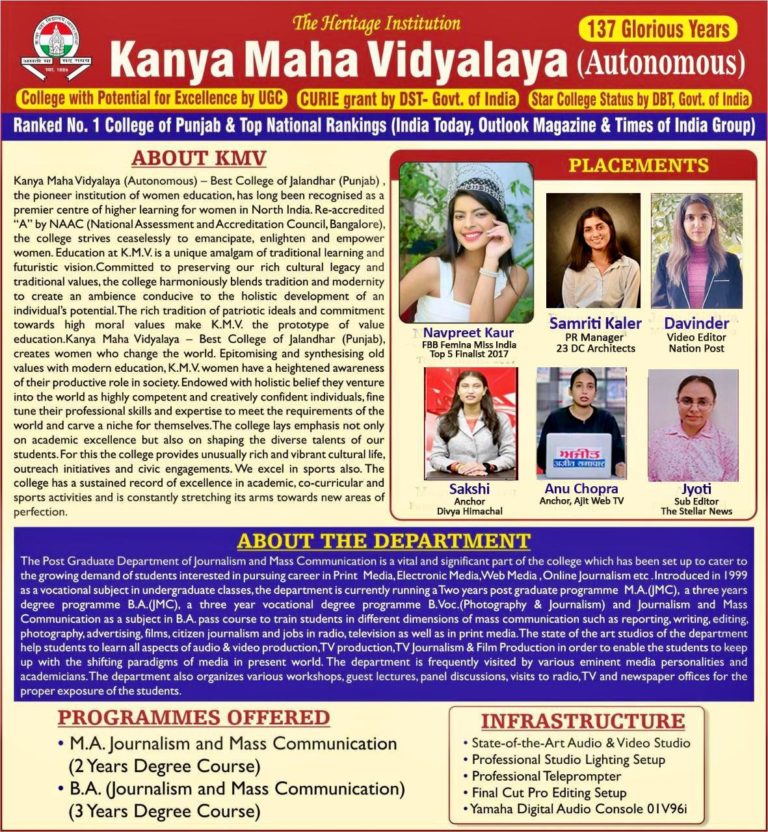
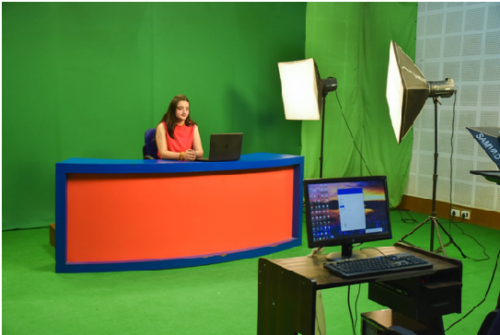
KMV PG Department of Journalism & Mass Communication has state-of-the-art Audio-Video Studios and a curriculum that includes practical labs like Radio & TV Production Lab, Video Production: Idea to Screen, and a final year Film Project. The department heavily focuses on practical training, including various aspects of film and video production.
- Curriculum Focus: The course structure for the Bachelor of Arts (Journalism and Mass Communication) & Master of Arts (Journalism and Mass Communication)includes subjects and labs dedicated to filmmaking and production:
- Video Production: Idea to Screen
- Operation & Handling of Video Equipment (Practical)
- Radio & TV Production Lab
- Video Electronic Film Production
- Film Project (in Semester VI)
Programmes Offered
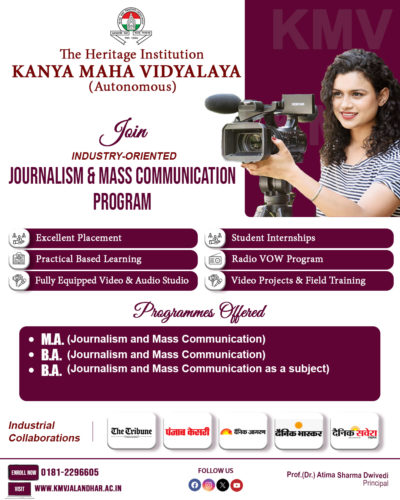
- M.A. Journalism and Mass Communication (2 Years Degree Course)
- B.A. (Journalism and Mass Communication) (3 Years Degree Course)
- Journalism and Mass Communication as a Subject in B.A. Pass Course, 3 Year Degree.
Workshops
The department has organized workshops by experts, such as on film production and filmmaking by Milind Damle, FTII Pune, and on documentary filmmaking by Mr. Ravi Davla, FTII, Pune.
Infrastructure
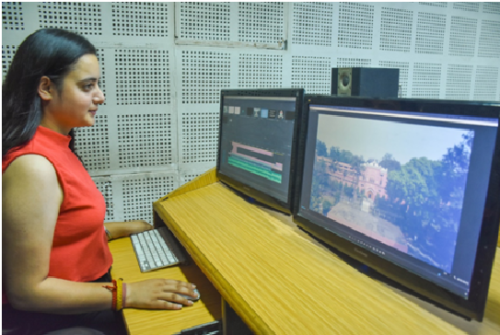
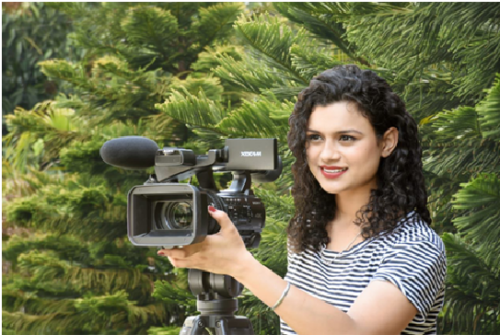
The department is equipped with a professional-grade Audio & Video Studio, cameras (including Sony Z150 4K), professional lighting, and video editing software like Final Cut Pro on Mac-OS, indicating a robust environment for creating quality film projects.
Film Projects
| 01 | Mind is Power | Agam Garg | https://www.youtube.com/watch?v=NjFLKjx-xL4 |
| 02 | Bas Fail Mat Hona | Sakshi | https://www.youtube.com/watch?v=03As86TI2TA |
| 03 | MAA Ka Sapna | Kirandeep Kaur | https://www.youtube.com/watch?v=DEmQ4vXRgIM |
| 04 | Save Water for the Future | Vani | https://www.youtube.com/watch?v=HidXxjmJdc8 |
| 05 | Stop Ragging For Now and Forever | Vidisha Thakur | https://youtu.be/zQpUZhH8MR4?si=iQUoxeGhw46wQIMi |
| 06 | KMV Promo | Niharika, Vidisha, Pranjali & Aman | https://www.youtube.com/watch?v=UewQTYkQm64 |
| 07 | The New Song | Vidisha &Shranya | https://drive.google.com/file/d/141jms-GzGAC5dvpnkp5SnT_RHLZDcUGD/view |
| 08 | Jallianwala Bagh: Ek Aawaaz | Garima & Nidhi | https://youtu.be/9zsrRKqlCqo?si=eykS1NQLq7qFmnw1 |
USPs
The PG Department of Journalism and Mass Communication stands as a beacon of excellence for aspiring media professionals. Combining a legacy of academic rigour with a forward-thinking approach, the department ensures students are not just degree-holders, but industry-ready experts. USPs that set us apart:
Premier Rankings & Recognition
We are consistently recognised for our commitment to quality education. The department is proudly ranked among the top colleges in Punjabby prestigious national publications, including India Today and Outlook Magazine. This recognition underscores our status as a leader in media studies within the region.
State-of-the-Art Infrastructure
- Learning happens beyond the chalkboard. Our students train in a professional environment that mirrors real-world media houses:
- Dedicated PCR (Production Control Room): High-end switching and monitoring equipment for live broadcast training.
- Video Studio: A fully equipped space for news anchoring, talk shows, and short film production.
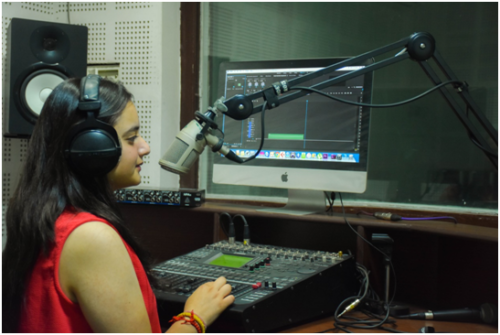
- Audio Studio: Advanced recording and editing suites designed for podcasting, radio jockeying, and voice-overs.
Equal Emphasis on Practical Learning
We believe that journalism is a craft learned by doing. Our curriculum balances theoretical foundations with intensive practical workshops. Whether it is field reporting, digital editing, or camera handling, students spend as much time in the field and the lab as they do in the classroom.
Live Projects & Hands-on Experience
- Students gain immediate exposure through our in-house media platforms:
- KMV Radio VOW (Voice of Women): An active platform where students script, record, and broadcast content, honing their skills as radio professionals.
- Film Projects: From documentary filmmaking to short features, students take charge of the entire creative process—from script to screen.
Industry Integration & Global Exposure
- To bridge the gap between academia and the professional world, we organize:
- Regular Educational Trips: Visiting historical sites and cultural hubs to enhance storytelling skills.
- Industrial Visits: Frequent tours of leading newspaper offices, news channels, and advertising agencies to understand the daily grind of the media industry.
Outstanding Placements
Our success is reflected in our alumni. We boast a stellar track record of placements in reputed media organisations across Punjab and India. Our graduates are currently making their mark in:
- National and Regional News Channels
- Premier Print Publications
- Digital Media Houses and PR Agencies
- Radio Stations and Production Houses
Faculty
Kanya Maha Vidyalaya (Autonomous) is proudly powered by WordPress